

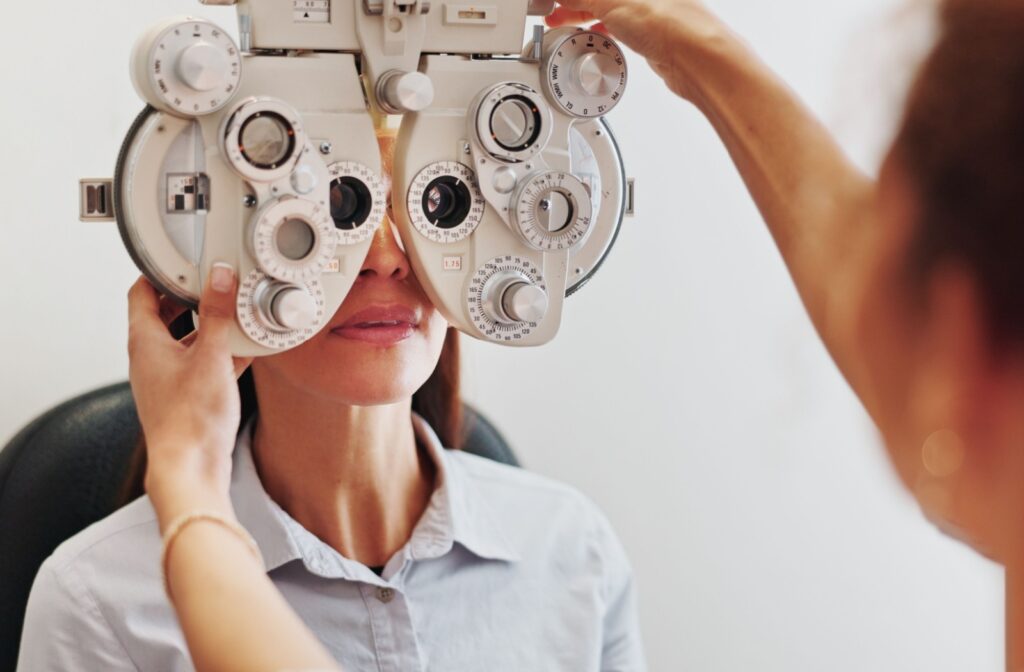
You might think that, if you can read the letters on a chart, your eyes are perfectly healthy. An eye exam, however, is much more than a simple vision test. Different exams are designed to check for different things based on your age, health, and even your lifestyle.
A routine check for an adult is quite different from an exam for a child or someone with a health condition like diabetes. The truth is that not all eye exams are the same, because everyone’s eyes and health needs are different. An adaptive and tailored approach towards eye exams helps ensure you and your family receive the care you need.
What to Expect During a Comprehensive Eye Exam
A comprehensive adult eye exam serves as a foundation for your long-term eye health. While every visit is personal, your local eye care provider will likely perform a few common tests. These steps help create a complete picture of your vision and health.
Checking Your Vision Acuity
This is the part of the exam you’re probably most familiar with, the letter chart. It helps determine how clearly you see at various distances. The results indicate whether you might benefit from glasses or contacts to sharpen your vision.
Assessing Your Eye Health
Your eye doctor also looks at the physical structures and health of your eyes. This includes checking for early signs of eye conditions such as glaucoma, cataracts, or macular degeneration. It’s a key part of preventative care that protects your sight.
Review Your Personal & Family Health History
Your overall health and family history can affect your eyes in significant ways. Discussing this information helps your doctor identify potential risks and allows them to tailor your exam to your needs.
Eye Exams for Different Ages & Stages
Your vision needs change throughout your life. That’s why eye exams are adapted for different life stages, from childhood to your senior years. It’s important that every member of your family gets the right type of exam to support their eye health.
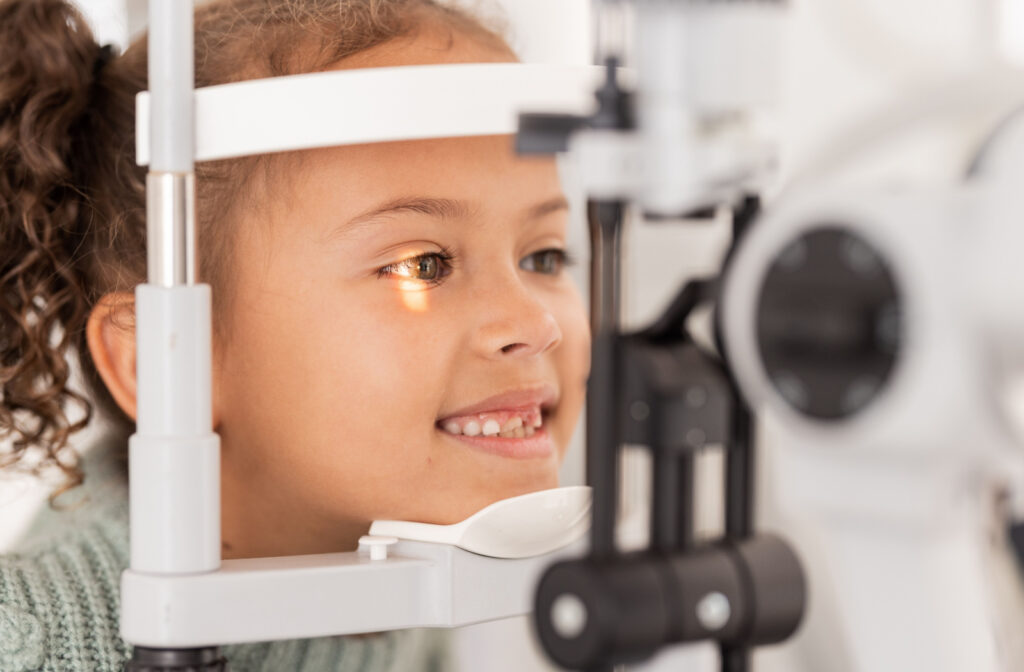
Children’s Eye Exams
A child’s eye exam focuses on healthy visual development, which is important for learning and coordination. Your optometrist will check for potential issues like:
- Proper eye alignment & teamwork
- Lazy eye—also known as amblyopia
- The ability to smoothly track objects
- Healthy color vision
Adult & Senior Eye Exams
As you get older, your risk for certain eye diseases increases. Eye exams for adults and seniors put more focus on detecting the first signs of age-related conditions. These exams can reveal issues like glaucoma, cataracts, and age-related macular degeneration, which may not have obvious symptoms in their early stages.
Exams for Specific Needs
Sometimes, a standard comprehensive exam isn’t enough to address a specific concern. If you have certain health conditions or want to wear contact lenses, you may need additional tests.
Diabetic Eye Exams
Diabetes can affect the small blood vessels in the back of your eye, which is why a diabetic eye exam is so important. This exam often involves dilating your pupils with eye drops, allowing your doctor to get a clear, wide view of your retina.
Contact Lens Fittings & Evaluations
If you’re interested in wearing contact lenses, it’s necessary to get a contact lens fitting. This process includes specific measurements of your eye to find a lens that fits correctly and comfortably. You’ll also learn how to properly insert, remove, and care for your new lenses.
Why A Comprehensive Exam Matters
Regular eye exams are about much more than just updating your prescription. They’re also an important part of your overall health routine. A thorough exam can reveal a great deal about your general health, while also helping to identify eye diseases in their early stages.
When you look for a new eye doctor, it helps to find one who can serve your entire family’s needs. From children to seniors, everyone requires a slightly different approach to eye care. A versatile practice can become a long-term partner in your family’s health.
Discuss Your Family’s Needs
Open communication with your eye doctor is important for receiving personalized care. When you find a professional you trust, it’s easier to manage your family’s eye health.
At Total Vision, we support a network of dedicated partners who provide thorough eye care for the whole family. We encourage you to connect with a local eye care provider to schedule the right exam for you. Your vision is a vital part of your life, and we are here to help you protect it.