
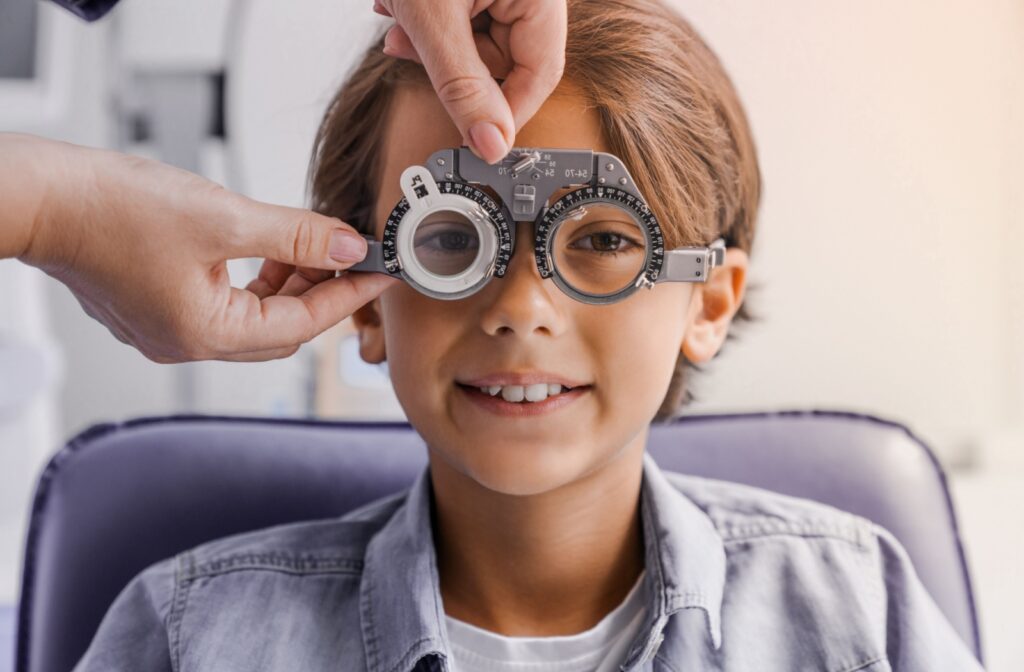
You may have noticed that your child’s glasses prescription seems to get a little stronger after each annual eye exam, and wonder whether it’s unavoidable. With support from partners of Total Vision, a proactive approach to your child’s eyesight is becoming more common, and it all starts with a comprehensive eye exam.
Myopia control is a growing priority because it focuses on slowing the progression of nearsightedness in children to support their long-term eye health. This strategy moves beyond simply correcting blurry distance vision and works to manage the underlying changes in the eye that cause myopia to worsen.
What Is Myopia and Why Is It a Concern?
More Than Just Blurry Vision
Nearsightedness, or myopia, makes distant objects appear blurry. While glasses and contact lenses help your child see clearly, a rapidly changing prescription can indicate a risk of developing high myopia, which is associated with a higher risk of different eye health conditions later in life.
This increased risk exists because myopia causes the eyeball to grow too long lengthwise, which can thin the tissue at the back of the eye over time. Keeping myopia at a lower level helps protect the structures inside the eye as your child grows into an adult.
Factors Behind the Rise in Nearsightedness
You might wonder why so many more children seem to need glasses these days, and 1 factor is modern lifestyles. Children often spend more time indoors on digital devices and less time playing outside, which can affect how their eyes develop. Though that is a factor, vision is influenced by both genetic and environmental factors.
The Goal of Myopia Management for Your Child
A Shift from Correction to Management
Traditional glasses and contacts do a great job of helping your child see the board at school. Myopia management, however, has a different goal. It aims to slow the physical lengthening of the eyeball, which helps keep their prescription more stable as they grow.
When Treatment Is Most Effective
Catching myopia early gives you the strongest opportunity to manage it. These treatments are typically started during childhood and the teenage years, when the eyes are still growing and developing. An early and consistent approach can make a noticeable difference in how your child’s vision develops over time.
Regular visits to a local eye care provider help a professional team monitor these changes closely. By tracking your child’s eye growth and the rate of their prescription change, they can adjust the treatment plan as needed.
An Overview of Myopia Control Treatments
After a thorough evaluation, an eye doctor can discuss different myopia control methods available to help manage your child’s myopia. Some of these options include:
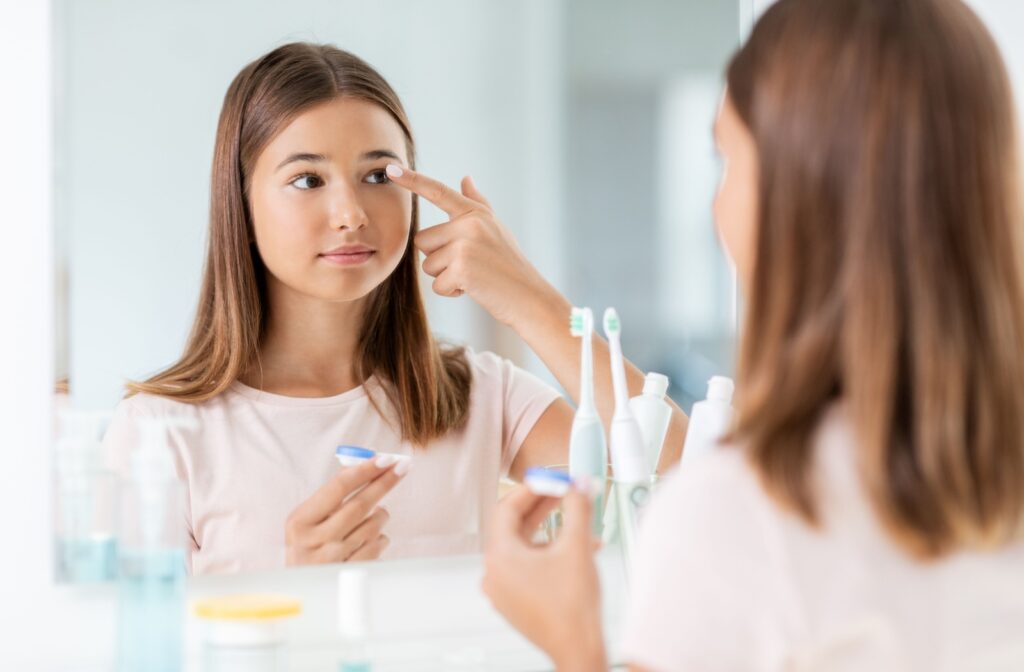
- Specialized contact lenses: Certain soft contact lenses are designed with focusing powers that help redirect peripheral (side) light and reduce the signal for the eye to grow longer.
- Low-dose atropine eye drops: These can help relax the eye’s focusing mechanism, which has been shown to slow down the progression of nearsightedness in many children.
- Innovative spectacle lenses: These feature specialized lens technology that helps manage how light focuses on the outer parts of the retina (the back of the eye), similar to how specialized contact lenses work.
The Long-Term Value and Benefits of Myopia Control
Choosing to manage your child’s myopia is an investment in their future vision and eye health, with benefits that extend far beyond having clear sight today. Myopia control aims to set them up for a lifetime of healthier eyes by reducing the risks associated with high myopia.
While a stable prescription is a clear benefit, myopia control also offers practical advantages for your child’s daily life. A lower prescription often means thinner, lighter lenses in their glasses, which can be more comfortable for sports and other activities.
Start a Myopia Plan with a Local Eye Care Provider
What to Expect at a Consultation
Your first step is a conversation with an eye care professional. During a consultation, the team can perform a comprehensive eye health evaluation to help understand your child’s eyes. You can discuss your child’s lifestyle, family history, any concerns you have, and get all your questions answered in simple, clear terms.
Create a Personalized Treatment Strategy
There is no 1-size-fits-all solution for myopia management. Based on the exam and your discussion, the optometry team can recommend an approach that fits your child’s vision needs and your family’s daily routine. The goal is to create a practical and effective plan together.
Discover Myopia Management Across California
The Total Vision partners are here to support your family’s eye health. Schedule a consultation with your local eye care provider to explore how a personalized myopia management plan with an experienced eye doctor can benefit your child.