
Key Takeaways
- Current evidence shows that blue light doesn’t permanently damage your eyes.
- Digital screens emit a small amount of blue light that scatters easily.
- Screen time often contributes to dry eye and muscle fatigue from reduced blinking.
- Evening screen use can disrupt some people’s natural sleep cycles.
- Simple habits like resting your eyes and adjusting screen settings can help keep your vision comfortable.
You’ve probably noticed your eyes feel tired, dry, or strained after a long day of looking at screens. With all the information on the internet about blue light, you might wonder if the bright glow from your screen is secretly harming your vision, or if any of it is a myth. Our team at Total Vision is here to explain what blue light is and if it’s actually causing damage.
Current evidence shows that blue light from digital screens doesn’t permanently damage your eyes. Instead, digital eye strain usually stems from how you interact with your digital devices throughout the day.
The Truth About Blue Light and Your Vision
Sources of Blue Light in Daily Life
We hear so much about blue light coming from devices that we often forget about the largest source of blue light there is: The sun. Step outside on a clear day, and the sun showers you with these bright light waves from sunrise to sunset.
Indoors, you encounter artificial versions of this light from your phone, television, and computer monitor. Your home lighting also contributes to this exposure through LED bulbs and fluorescent overhead tubes.
Harmful Light Waves for Your Eyes
There are harmful light waves that exist, including invisible ultraviolet rays from the sun, which pose increased risks to your long-term eye health. That’s why we recommend wearing sunglasses outside, even on cloudy days.
Inside, you can relax knowing that current evidence shows digital screens won’t permanently damage your eyes. However, spending long periods looking at screens can contribute to digital eye strain, often because we blink less frequently and spend extended time focusing at a close distance.
Screen Time and Digital Eye Strain
Why Your Eyes Feel Tired
Your eyes could be feeling tired for a number of reasons, including digital eye strain. You normally blink roughly 15 times a minute, but when using screens, we tend to blink less. That reduces the amount of tears lubricating your eyes, which can contribute to dry, uncomfortable eyes by the end of the day.
Common Signs of Digital Eye Strain
There are some signs that it might be time to take a break from the screens. Pay attention to these frequent signs of digital eye strain:
- A dull pain behind your eyes after long hours of screen time.
- Fatigue, sore, dry, or tired eyes by late afternoon.
- Discomfort, including neck and shoulder pain, from leaning forward with poor posture.

Does Blue Light Affect Sleep?
The Connection to Your Sleep Cycle
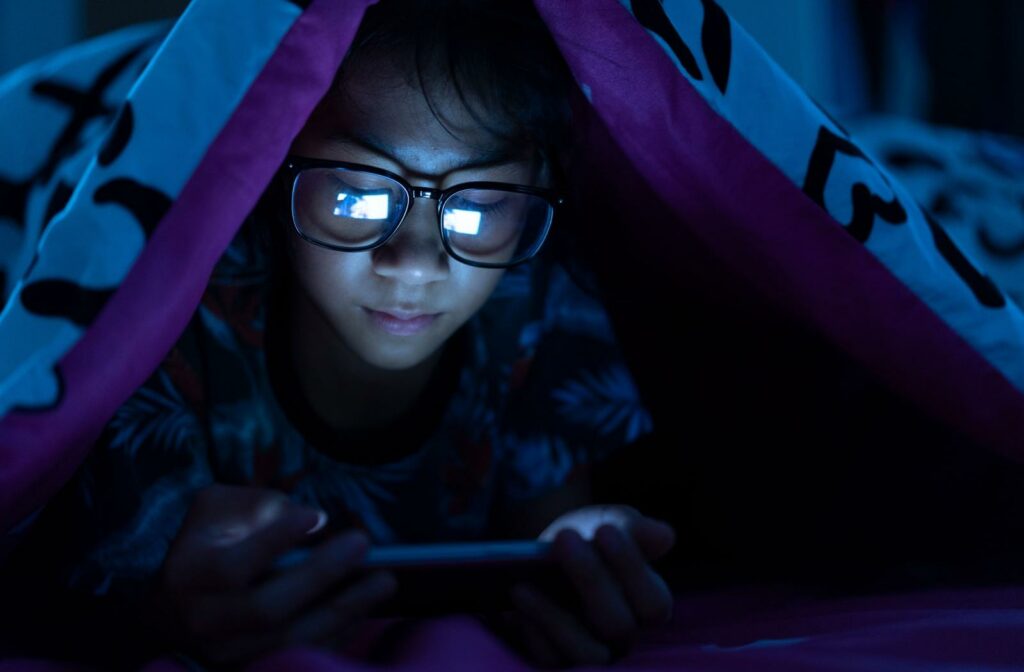
Natural daylight tells your brain that it’s time to wake up and stay alert, starting a kind of “countdown” on your internal clock. Scrolling on your phone late at night can confuse this natural system because your brain is receiving bright light instead of the darkness it was expecting.
Benefits of Natural Light
Spending time outside in natural daylight provides wonderful benefits for your entire family. Bright outdoor light helps children develop healthy vision as they grow. Natural sunlight may even help elevate your mood during dark winter months.
Blue Light Glasses and Filters
How Blue Light Lenses Work
Special lens coatings on blue-light glasses filter specific wavelengths of light from brightly lit screens. Many people buy these items hoping to relieve their daily eye fatigue, but many eye care professionals do not routinely recommend blue-light-filtering lenses solely for digital eye strain because evidence of benefit remains limited.
Device Settings and Screen Filters
You have plenty of free tools right on your phone or laptop to reduce glare. Try switching your device settings to warmer screen tones as the sun goes down, or using a physical screen protector to lower the harsh digital glare from overhead office lights. Lowering your screen brightness creates a much more comfortable experience in dark rooms.
Simple Steps for Healthy, Comfortable Eyes
The 20-20-20 Rule
One of the first steps for relieving digital fatigue is to take regular screen breaks throughout your day. Try the 20-20-20 rule: Every 20 minutes, look at something 20 feet away for at least 20 seconds. This quick habit gives your eye muscles time to relax and reset.
Daily Care for Digital Users
For those with dry eye, you can keep a small bottle of artificial tears on your desk to add moisture back to your eyes. You can also move your computer monitor so it sits a full arm’s length from your face. If evening screen use seems to affect your sleep, consider limiting screen time before bed or enabling nighttime display settings on your devices.
Schedule Your Next Visit
At Total Vision, we empower local partners across California to bring you modern testing and comfortable eyewear. No matter which location you choose, our clinics provide consistent, quality care for your entire family from trusted professionals. Find an eye doctor near you and help keep your eyes healthy for years to come.