
Your child’s eyes carry a lot of the daily workload, from reading the whiteboard to chasing a ball across the playground. Clear vision keeps kids curious and confident, both in the classroom and outside of it.
Schedule your child’s eye exam around age 3-5 and every year once school starts. A local eye care team can help spot changes early, and knowing what to look for in a provider makes that search a lot easier.
Why Vision Matters for Your Child’s Growth
Your child reads the board, watches a ball fly across the field, and reads friends’ faces at recess. Sight ties all of that together.
When vision blurs, learning and friendships can suffer too.
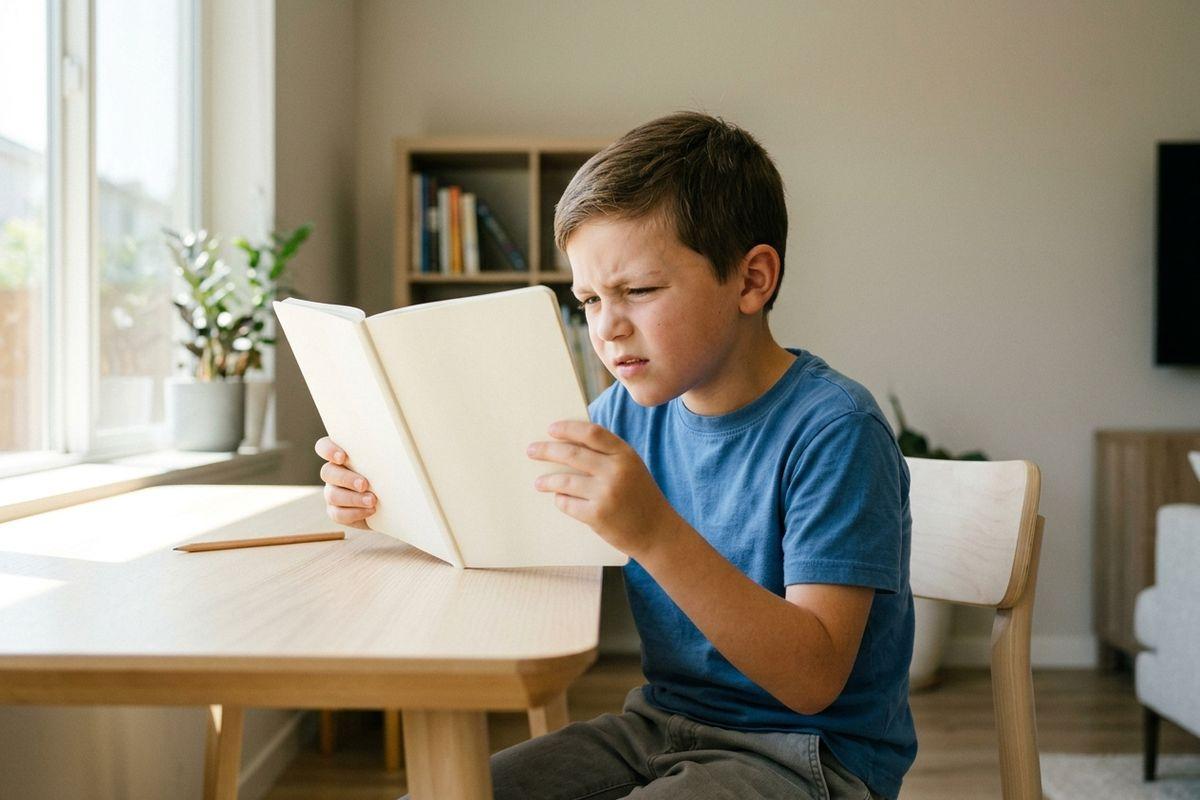
Here’s the tricky part: kids rarely say there is something wrong with their sight, because they assume everyone sees the world the same way. A child who squints at homework or avoids reading may just be adapting to blurry vision without realizing it.
When to Schedule Your Child’s First Eye Exam
Plan a visit around age 3-5, when your child starts naming shapes and colors. Once school starts, yearly visits can help keep small changes from turning into daily struggles with reading and focus.
Screenings vs. Full Exams
A school screening gives a quick look and can flag a few obvious concerns. It helps, but it misses a lot.
A full exam goes deeper. An optometrist checks how the eyes team up, how they focus at different distances, and the health of the inner eye.
Think of a screening as a smoke alarm and a full exam as a home inspection.
Signs Your Child May Have Vision Problems
Kids show you more than they tell you. Watch for these small habits during homework, screen time, or sports:
- Squinting or tilting the head to see
- Holding books and screens very close to the face, which may point to nearsightedness
- Headaches
- Tired eyes
- Rubbing their eyes often
When to Call Your Child’s Optometrist
Some signs need a call sooner rather than later:
- Blurry vision at any distance
- An eye that turns in or out
- A pattern of avoiding reading or close work
What Happens During a Pediatric Eye Exam
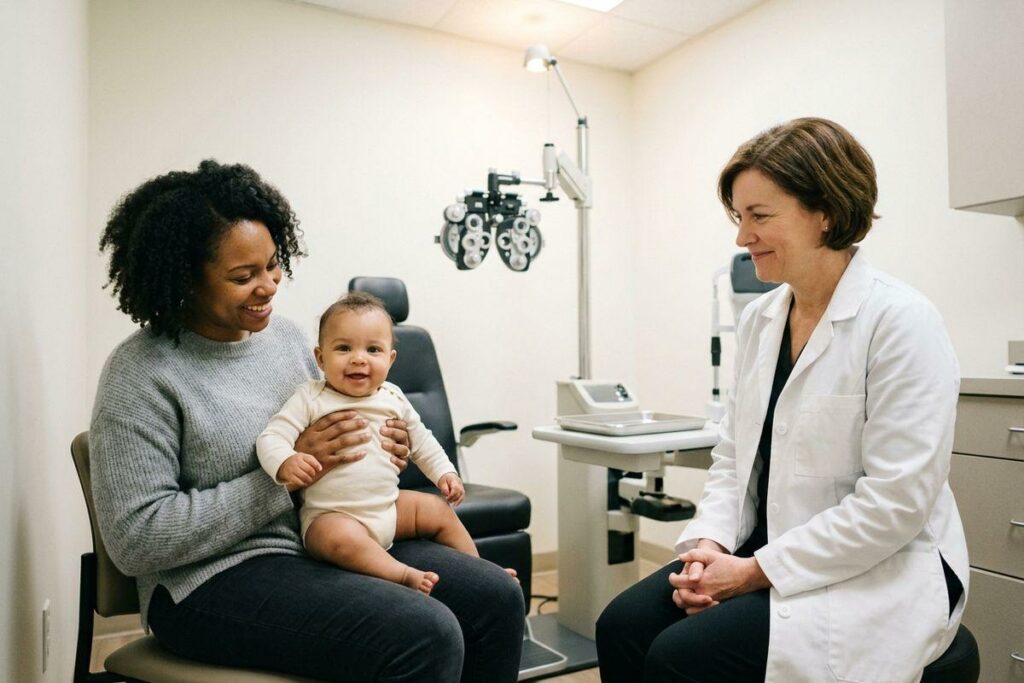
The visit starts with a conversation. The optometrist asks about your child’s health, any family eye history, and habits you’ve noticed at home. Your notes here are gold.
Next comes the fun part for kids. An eye chart measures how sharply your child sees, and alignment checks show how the eyes move together. Then the optometrist looks inside the eye to check its health, sometimes using a camera to take images of the retina.
How to Prepare Your Child
Keep it simple. Tell your child the optometrist just wants to see how their eyes work, and that nothing will hurt.
Play a home version of the eye chart by naming letters or animals across the room. Toss a favorite stuffed animal or blanket in the bag, and a new room can start to feel familiar fast.
Common Eye Conditions in Kids
Several conditions show up often in childhood, and many can be managed well when found early:
- Nearsightedness, farsightedness, and astigmatism
- Lazy eye and crossed eyes
- Trouble with the eyes working together as a team
Simple Ways to Support Healthy Eyes at Home
Small daily habits add up. Try the 20-20-20 rule: every 20 minutes, have your child look at something 20 feet away for 20 seconds. It gives tired eyes a quick break during screen time.
Food helps too. Leafy greens, fish, and carrots carry nutrients that support eye health.
And don’t skip the accessories. Sunglasses and proper sports goggles can shield growing eyes from sun and stray elbows on the field.
Outdoor Play and Myopia
Time outside does more than burn energy. Daylight and distance viewing may slow the progress of nearsightedness in kids.
Encourage bike rides, tag, and weekend soccer. All that outdoor play gives the eyes room to relax and focus far away.
Give Your Child’s Eyes the Attention They Deserve
Your child’s sight shapes how they learn, connect, and grow, and steady care keeps it on track.
Any of our Total Vision optometrists can walk you through every stage with clear answers and a friendly approach. Reach out to your local eye care provider today, and book your child’s next eye exam.