

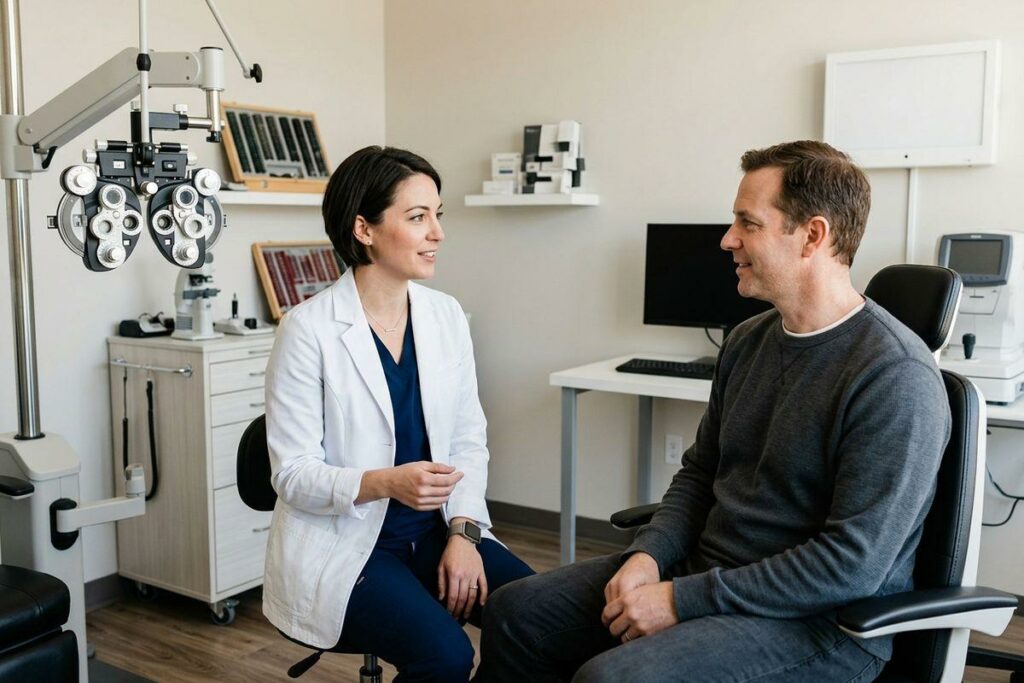
Eye exams move quickly. You read a line of letters, say which lens looks sharper, and then you’re back at the front desk with a prescription slip.
Speaking up during that window changes what you leave with. Ask about your test results, your risk for eye disease, your daily habits, and your visit schedule, and a routine eye exam turns into information you can actually use.
Our optometry teams field these questions every day. Here are 10 worth bringing with you.
Questions About Your Eye Exam
Machines and drops are easier to sit through when you know what each one measures.
1. What Tests Am I Getting Today?
Ask for the list at the start, before anything touches your face. A standard exam usually includes a few of these:
- A letter chart to measure how sharply you see
- A refraction to determine your prescription
- A pressure reading
- A look at the back of the eye, sometimes with photos
Dilating drops can leave your vision blurry for a few hours, so ask whether you’ll be comfortable driving home or heading back to work.
2. Why Does My Optometrist Run This Test?
Every step has a reason behind it. Some tests measure the pressure inside your eye, which can point toward glaucoma well before you notice anything yourself.
Others photograph your retina so your optometrist can compare this year’s images against last year’s. Small changes show up in that comparison.
3. What Do My Eye Exam Results Mean?
Numbers on a screen don’t say much on their own. Ask your optometrist to put them in plain language and tell you what comes next.
And if an answer sounds vague, say so. You can ask for the same explanation a second time.
Questions About Eye Health and Risk
Risk looks different for everyone, and your optometrist can only account for what they know about you.
4. Am I at Risk for Eye Disease?
Age and family history both factor in. Glaucoma can develop with few early signs, which is why your optometrist may want to know whether a parent or sibling has been treated for it.
Mention any eye condition that runs in your family, even one you only half remember hearing about.
5. Can My Health Conditions Affect My Eyes?
Diabetes and high blood pressure often show up at the back of the eye before you feel a thing anywhere else.
Bring a list of your medications too. Some can cause dryness or change how well you see at night, and that’s useful context during your exam.
6. What Symptoms Should I Watch For Between Visits?
Ask which changes warrant a phone call and which can wait until your next appointment. A few signs worth mentioning right away:
- Blurry vision that comes and goes
- New floaters or flashes of light
- Eye pain or pressure that lingers
- A dimming of your side vision
- Headaches after reading or screen time
Questions About Treatment and Daily Habits
Advice sticks better when it fits the way you actually spend your day.
7. What Are My Treatment Options?
If your optometrist finds something, ask what can be done about it and on what timeline. Some conditions call for drops, others for a new prescription or regular monitoring.
Find out what happens if you wait. Cost and insurance coverage are worth raising while you’re still in the chair, since that’s easier than calling back later.
8. How Can I Protect My Eyes Every Day?
Bring up the 20-20-20 rule: every 20 minutes of screen time, look at something 20 feet away for 20 seconds.
Sunglasses that block UV rays can help on bright days, and they’re worth wearing in winter too. Snow reflects more light than most people expect.
If you wear contacts, ask how to clean and store them properly. Good habits may lower your risk of irritation and infection.
For kids, ask about time outdoors and a consistent bedtime. Both can support developing eyes.
Questions for Every Age and Stage
Eye care changes over a lifetime, and so does how often you need to be seen.
9. How Often Should I Come Back?
Ask for a specific interval rather than a general suggestion. Children often need yearly exams while their prescriptions change, and adults with no concerns may go longer between visits.
That spacing tends to tighten again after 60. Book your next appointment before you leave, or at least put the month in your calendar.
10. How Will My Vision Change as I Age?
Reading small print usually gets harder sometime in your 40s. Cataracts become more common decades later.
Ask what’s typical for your age so the changes don’t surprise you. Knowing what’s coming makes it easier to tell the difference between a normal change and something that needs attention.
Bring Your List to Your Next Eye Exam
You don’t need all 10 questions memorized. Pick 2 or 3 that apply to you, type them into your phone, and pull them up when your optometrist asks if you have any concerns.
Total Vision brings together optometry practices across California, and our teams welcome families at every age. Book an eye exam at the practice nearest you and bring your list with you.